
Types of Land Surveys Explained
Not every land survey is the same. Ordering the wrong type can cost you thousands of dollars, delay your closing, or leave you exposed in a boundary dispute. Whether you are buying a home, financing a commercial property, or breaking ground on a new build, choosing the right survey is one of the most important decisions you will make.
The four main types of land surveys are the boundary survey, the topographic survey, the ALTA/NSPS survey, and construction staking. A boundary survey marks your legal property lines. A topographic survey maps the shape of the land. An ALTA/NSPS survey is the detailed national standard used for commercial deals. Construction staking turns building plans into physical markers on the ground.
What Is a Boundary Survey?
A boundary survey is the most requested type of survey in the country. It answers one simple question. Where does your property begin and end?
A licensed surveyor researches your deed and county records. They then visit your property to find existing markers like iron pins or concrete monuments. New markers are placed at any missing corners. The final result is a signed map showing your exact property lines.
When You Need One
You should order a boundary survey if you plan to:
- Install a fence, pool, shed, or driveway
- Buy or sell a home
- Settle a property line disagreement with a neighbor
- Refinance your mortgage
- Split a large parcel into smaller lots
Typical Cost
A residential boundary survey costs $300 to $2,300 in 2026. Most homeowners pay between $500 and $1,200. Prices run higher in California, Oregon, and Washington. They tend to be lower in the Midwest and parts of the South.
What Is a Topographic Survey?
A topographic survey shows the shape and features of your land in three dimensions. While a boundary survey shows where your land is, a topographic survey shows what it looks like.
This type of survey records hills, slopes, valleys, trees, streams, and any structures on the property. It also marks the location of visible utilities such as poles, manholes, and meters. Architects, civil engineers, and builders rely on this data to design safe and code-compliant projects.
When You Need One
A topographic survey is needed before you can:
- Design a new home, garage, or addition
- Plan a drainage or grading system
- Build a commercial structure
- Apply for permits that require elevation data
- Create a landscaping or site plan
Typical Cost
A topographic survey usually costs $400 to $1,500 for a residential lot. Larger or more complex sites can run $2,000 to $6,500. Wooded land, steep slopes, and big acreage drive the price up because more data points are required.
What Is an ALTA/NSPS Land Title Survey?
An ALTA/NSPS survey is the gold standard of land surveys. It follows the 2021 Minimum Standard Detail Requirements set by the American Land Title Association (ALTA) and the National Society of Professional Surveyors (NSPS). These rules took effect on February 23, 2021.
This survey combines boundary work, topographic data, and title research into one detailed report. Because the standards are national, a lender in Texas reads the survey the same way as a lender in New York.
When You Need One
This survey is almost always required for:
- Commercial real estate purchases
- Multi-family, retail, office, or industrial deals
- Title insurance on high-value properties
- Loans with extended coverage
- Complex parcels with many easements
What Is Included
An ALTA survey shows every boundary line, easement, right-of-way, and encroachment. It also identifies access points, utilities, building setbacks, and the flood zone classification. Clients can request extra items from “Table A,” which lists up to 20 optional details such as zoning notes or parking counts.
Typical Cost
ALTA surveys are the most expensive option. Small parcels often cost $1,200 to $4,000. Larger commercial sites can range from $2,500 to $6,000 or more. The work can take several weeks because of the deep research involved.
What Is Construction Staking?
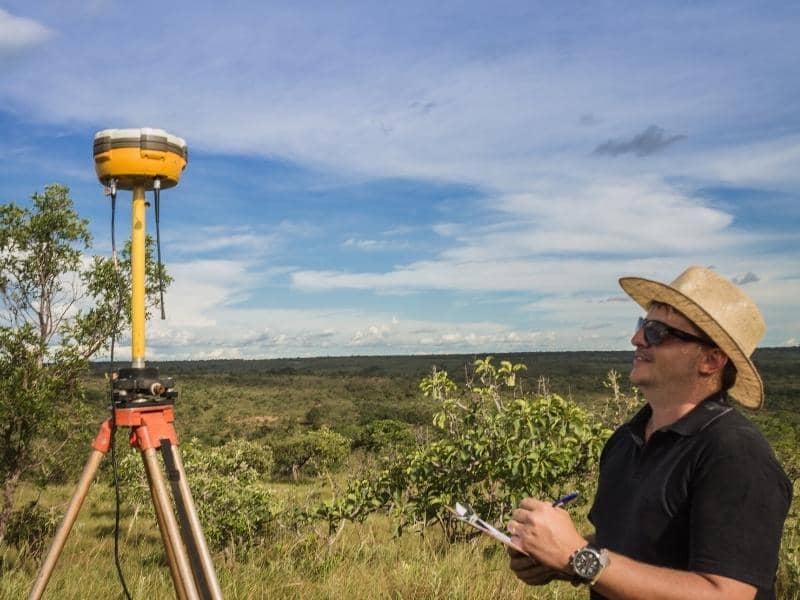
Construction staking is also called site layout. It is the step that turns blueprints into real markers on the ground. Once design plans are approved, a surveyor uses GPS units and total stations to place wooden stakes at exact points across the site.
These stakes tell the construction crew where to dig, pour concrete, lay pipes, and build walls. Even a small mistake can lead to a crooked foundation, broken drainage, or costly rework. That is why this job must be done by a licensed surveyor.
When You Need It
Construction staking is required for:
- New home or commercial building construction
- Road, sidewalk, and parking lot installation
- Underground utility lines such as water, sewer, and storm drains
- Foundation and footing layout
- Curb, gutter, and pavement work
Typical Cost
Staking is usually priced by project rather than by acre. Small residential layouts may cost a few hundred to a few thousand dollars. Commercial projects often range from $3,000 to $15,000 or more, especially when staking happens in several phases.
Quick Comparison
| Survey Type | Main Purpose | 2026 Cost Range |
| Boundary Survey | Mark legal property lines | $300 to $2,300 |
| Topographic Survey | Map elevation and features | $400 to $6,500 |
| ALTA/NSPS Survey | Full commercial title survey | $1,200 to $6,000+ |
| Construction Staking | Turn plans into ground markers | $500 to $15,000+ |
How to Choose the Right Survey
Pick a boundary survey if you only need to know where your lines are. Pick a topographic survey if you are designing or building something. Pick an ALTA/NSPS survey if a lender or title company requires it. Pick construction staking once your plans are approved and you are ready to build.
Many projects need more than one type. A new commercial building, for example, often requires a topographic survey for design, an ALTA survey for closing, and construction staking during the build.
Frequently Asked Questions
How long does a survey take?
A boundary survey usually takes two to four weeks. An ALTA survey can take three to six weeks because of the extra research.
Can one surveyor handle all four types?
Yes. A licensed Professional Land Surveyor is trained to perform every type of survey listed here. All 50 states require this license.
Who pays for a survey when buying property?
In most states, the buyer pays. In Alaska, Kansas, Nebraska, Illinois, and Missouri, the seller usually pays. For commercial deals, the buyer or borrower covers the cost.
Are there other types of surveys?
Yes. Other common ones include as-built surveys, subdivision plats, and mortgage location surveys. The four covered above are the most requested by property owners and builders.